
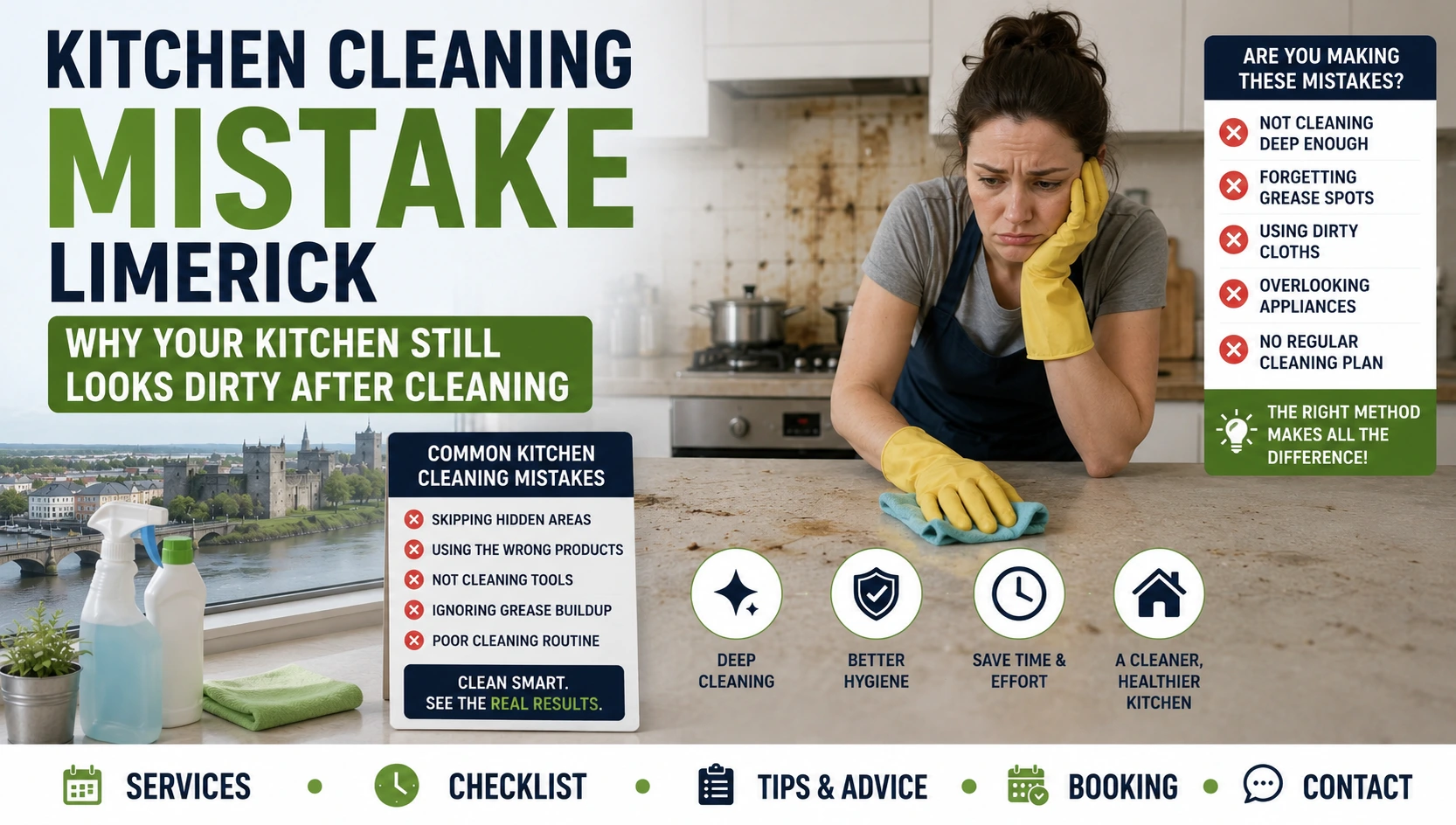
Kitchen Cleaning Mistake Limerick Why Your Kitchen Still Looks Dirty After Cleaning
You wiped every surface, mopped the floor, and it still feels dirty an hour later. This is one of the most common frustrations people raise about kitchen cleaning, and it almost always comes down to the same handful of areas being missed, not a lack of effort. This guide covers the specific kitchen cleaning mistake behind that feeling, and the seven areas most Limerick homes overlook.
If your kitchen still feels dirty after cleaning, the most common kitchen cleaning mistake is only addressing visible surfaces, worktops, hob, and floor, while leaving grease and residue on extractor filters, inside cabinet doors, behind appliances, and around light switches. These areas do not look obviously dirty at a glance, but they hold the grease film and odour that makes a recently cleaned kitchen still feel unclean.
Why This Happens: The Core Kitchen Cleaning Mistake
The single biggest kitchen cleaning mistake is treating visible dirt as the whole job. A worktop that looks clean can still carry a thin film of grease that attracts dust and feels tacky within hours, because wiping with a general spray removes surface dirt but does not cut through cooking grease that has bonded to surfaces over repeated use.
This is exactly the gap between a quick clean and a proper deep clean, addressed in more detail in our guide on the difference between deep clean and regular clean, regular cleaning maintains visible surfaces, while a genuine deep clean targets the grease and grime that regular wiping does not fully remove.
7 Areas Most Limerick Kitchens Miss
1. Extractor Fan Filters
The extractor above the hob catches airborne grease from every meal cooked, and that grease builds up on the filter mesh over weeks. A kitchen can look spotless while the extractor filter is coated in a layer of grease that continues circulating cooking odours through the room, one of the most common reasons a recently cleaned kitchen still smells like last night’s dinner.
2. Inside Cabinet Doors and Handles
Cabinet fronts get wiped regularly, but the inside edge of the door, right where your hand touches it, and the underside of handles accumulate grease from cooking hands touching them repeatedly. This area is rarely included in a standard wipe down since it is not visible unless you look directly at it.
3. Behind and Under Large Appliances
The fridge, oven, and dishwasher all sit slightly proud of the wall or floor, and the gap behind and underneath collects dust, crumbs, and grease that no amount of front facing cleaning reaches. This is precisely the kind of area covered in a genuine deep clean rather than routine maintenance.
4. Light Switches and Socket Plates Near Cooking Areas
Hands move between food, taps, and light switches constantly during cooking, transferring grease and residue onto switch plates that are almost never included in a standard clean. Over time this builds a sticky film that is easy to miss since switches are small and rarely inspected closely.
5. Inside the Oven and Hob Surround
This is one of the most consistently underestimated areas. A hob that looks clean on the surface often has baked on residue around the burner rings and beneath removable parts, and an oven left uncleaned for months develops the kind of carbon buildup covered in our guide to deep cleaning an oven in Limerick, buildup that standard wiping never touches.
6. Grout Lines on Splashback Tiles
Grout is porous and absorbs cooking grease and moisture differently to the tile surface around it, which is why grout lines often darken over time even when the tiles themselves are wiped regularly. A quick surface wipe skims over grout without addressing what has soaked into it.
7. Bin Area and Underneath the Bin
The area around and beneath a kitchen bin collects spills, drips, and residue that is easy to overlook since attention naturally focuses on the bin itself rather than the floor and wall space immediately around it, an area that contributes disproportionately to lingering kitchen odours.
Why This Matters Beyond a Home Kitchen
The consequences of missing these exact same areas scale up dramatically in a commercial setting. Health inspection reports from Limerick food businesses have specifically flagged hard to reach areas of the floor, particularly under equipment, as filthy with food debris, precisely the kind of overlooked zone described above, resulting in closure orders for affected premises. While a home kitchen carries far lower stakes than a licensed food business, the underlying pattern is identical, visible surfaces get attention, hidden and hard to reach zones do not, and that gap is where genuine hygiene problems accumulate.
For commercial kitchens specifically, this is exactly why professional kitchen cleaning for Limerick restaurants treats extraction, cabinet interiors, and under equipment zones as core scope rather than optional extras.
The Fix: What a Proper Deep Clean Actually Covers
Addressing all seven areas above in one session is a genuine deep clean, not a quick tidy. This typically includes:
- Extractor filters removed, soaked, and degreased
- Inside cabinet doors and handles wiped and degreased
- Appliances pulled forward where possible to clean behind and underneath
- Light switches and socket plates cleaned and sanitised
- Oven interior and hob surround fully degreased
- Grout lines scrubbed with a dedicated grout cleaning solution
- Bin area cleaned underneath and around, not just the bin itself
Doing this thoroughly once, then maintaining it with regular lighter cleaning, is far more effective than repeating a surface only clean weekly and wondering why the kitchen never quite feels properly clean.
Frequently Asked Questions
What are some common kitchen cleaning mistakes?
The most common mistake is cleaning only visible surfaces while missing extractor filters, behind appliances, inside cabinet doors, and grout lines, areas that hold grease and odour even when the kitchen looks tidy.
What is the biggest kitchen cleaning mistake people make?
Treating a surface wipe as equivalent to a deep clean is the biggest mistake, grease bonds to surfaces over time and requires degreasing agents and attention to hidden areas that a quick wipe does not address.
Why is my kitchen still dirty after cleaning?
Your kitchen likely still feels dirty because grease and residue remain on extractor filters, behind appliances, or on grout lines, areas a standard clean typically skips even when visible surfaces look spotless.
What is the fastest way to clean a dirty kitchen?
Start with the extractor filter and hob, since grease here affects the whole room’s smell, then work outward to worktops, cabinet fronts, and floors, tackling the highest impact areas first.
What is the best way to deep clean a kitchen?
A proper deep clean addresses extractor filters, oven interior, behind and under appliances, inside cabinets, grout lines, and high touch areas like switches, not just the visible worktop and floor surfaces.
How often should a kitchen be deep cleaned to avoid this mistake?
Every three to six months for most households, with more frequent extractor filter cleaning if you cook daily, since grease buildup on filters happens faster than most people expect.
Can a kitchen cleaning mistake lead to bigger hygiene problems?
Yes, in commercial kitchens specifically, the same overlooked areas, particularly floors under equipment and extraction systems, have led to documented health inspection failures and closures for Limerick food businesses, underlining why these zones matter beyond appearance alone.
For a professional deep clean that covers every one of these overlooked areas, see our kitchen cleaning services page, or find us on Google Maps to check reviews and location.