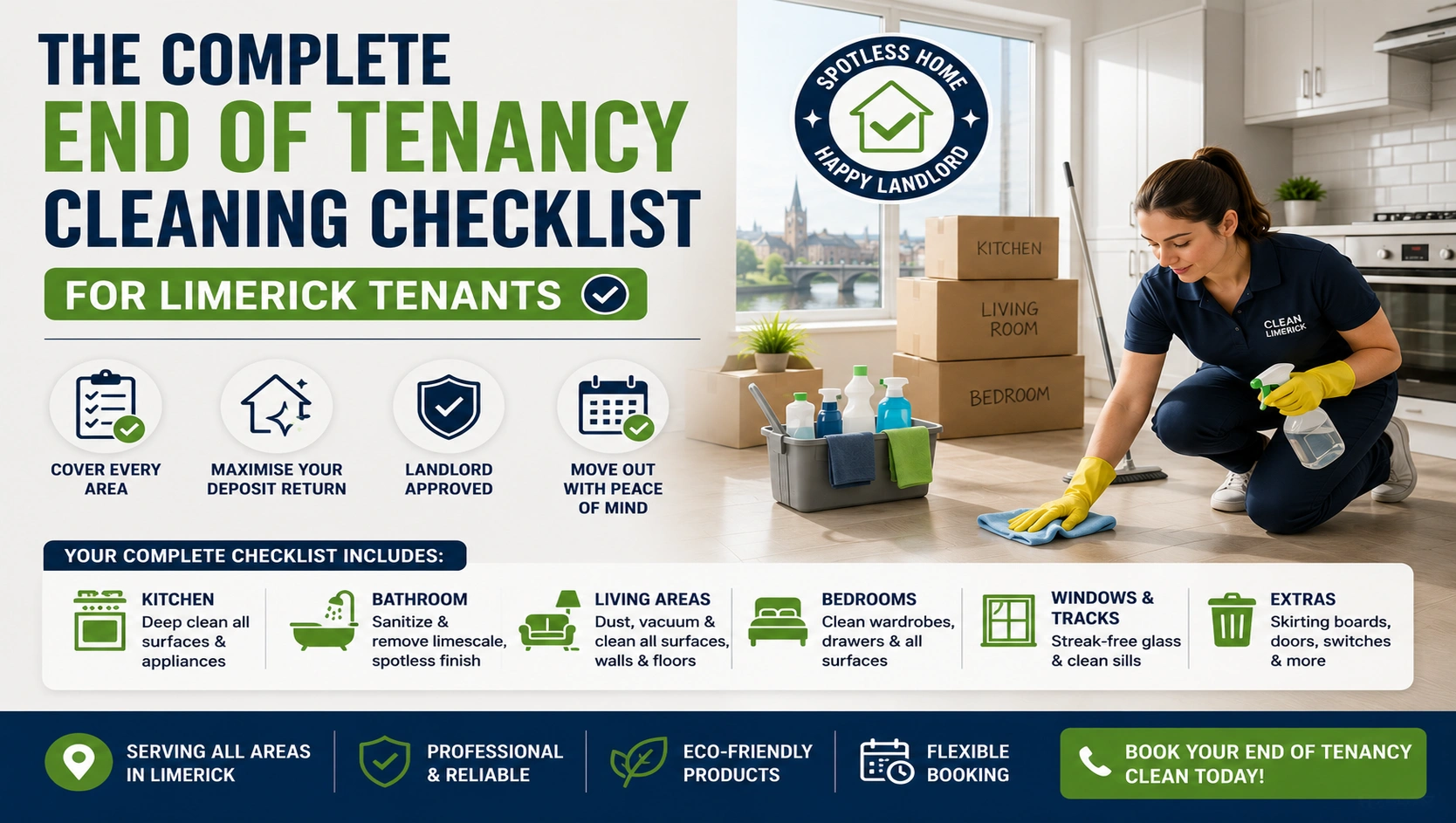
The Complete End of Tenancy Cleaning Checklist for Limerick Tenants
Moving out is stressful enough without wondering whether your landlord will find a reason to withhold part of your deposit. This end of tenancy cleaning checklist covers exactly what Limerick landlords and letting agents look for, room by room, so nothing gets missed and nothing becomes a dispute. If you’d rather leave it to professionals, our end of tenancy cleaning Limerick service covers everything on this checklist for you.
What Are the Main Things to Clean in an End of Tenancy Checklist?
The core categories are the kitchen, bathrooms, bedrooms, living areas, and often-forgotten spots like skirting boards, light fittings, and inside cupboards and wardrobes.
Landlords and letting agents in Limerick typically inspect against a standard checklist covering every surface, appliance, and fixture in the property, not just visibly dirty areas. Missing a single overlooked spot, like the inside of the oven or behind the fridge, is one of the most common reasons deposits get partially withheld.
Can You Give a General Overview of End of Tenancy Cleaning Requirements?
A proper end of tenancy clean means every room is returned to the condition it was in at move-in, accounting for normal wear and tear but not accumulated dirt, grease, or damage.
This is different from a regular weekly clean. It includes descaling, degreasing, dusting areas that don’t get touched day-to-day, and cleaning inside appliances and storage spaces, not just visible surfaces.
Kitchen Cleaning Checklist
The kitchen is the room most likely to cost you part of your deposit, since grease buildup inside the oven and extractor fan is the most commonly flagged issue by Limerick landlords.
Deep clean the oven, hob, and extractor fan, including grease filters
Descale and disinfect the sink and taps
Clean inside and behind the fridge and freezer
Clean inside the washing machine and dishwasher, including seals and filters
Wipe down all cupboards inside and out, and worktops
Clean the microwave inside and out
Mop and sanitize the floor, including under appliances where possible
Bathroom Cleaning Checklist
Descaling and mould removal are the two things Limerick landlords check most closely in bathrooms, particularly around tiles, grout, and shower areas.
Descale and disinfect the toilet, sink, and bath or shower
Remove mould from tiles, grout, and sealant
Clean and polish mirrors and glass shower screens
Wipe down all surfaces, including behind the toilet
Clean extractor fans and light fixtures
Empty and wipe out any cabinets or storage
Bedroom & Living Area Cleaning Checklist
Dusting and vacuuming inside wardrobes and under furniture are the most frequently missed tasks in bedrooms and living areas.
Dust all surfaces, including skirting boards, light fittings, and curtain rails
Clean inside wardrobes and drawers
Vacuum and mop all floors, including edges and under furniture
Wipe down doors, door frames, and light switches
Clean windows internally, including sills
Wipe down walls to remove scuffs or marks
What Should I Clean Before Moving Out to Get My Deposit Back?
Focus first on the kitchen and bathroom, since these are the two rooms landlords scrutinize most closely for deposit deductions, then work through bedrooms and living areas.
Beyond the room-by-room cleaning, take dated photos of every room once cleaning is complete, before you hand back the keys. This directly protects you if a landlord later disputes the condition of the property, a real and recurring issue for renters in Ireland.
What Is the Most Efficient Order to Clean Rooms for an End of Tenancy?
Work from the top of the property down and from the inside of rooms outward: ceilings and light fixtures first, then walls and surfaces, then floors last.
This order matters because dust and debris from higher surfaces falls onto lower ones and floors as you clean. Cleaning floors first only means redoing them once you’ve finished dusting and wiping everything above. A practical room order is: kitchen and bathrooms first since they take longest, then bedrooms, then living areas and hallways last.
DIY vs. Professional End of Tenancy Cleaning
A one-time professional end of tenancy clean in Limerick typically costs around €300 to €400 depending on property size, while DIY costs only your time but carries more risk of missing something landlords check for. See our full breakdown of the cost of end of tenancy cleaning in Limerick for exact pricing by property size.
DIY is a reasonable option if you have a full day or two to dedicate and are confident tackling oven degreasing, mould removal, and appliance interiors thoroughly. Professional cleaning makes more sense if you’re short on time, moving out of a larger property, or want the assurance of a company that knows exactly what Limerick landlords and letting agents look for during inspection, reducing your deposit dispute risk.
Which Areas Are Most Often Missed in End of Tenancy Cleaning?
The most commonly missed spots are inside the oven and extractor fan, behind and under large appliances, inside wardrobes and cupboards, skirting boards, and light fittings.
These areas don’t get touched during regular cleaning, so they accumulate the most buildup by the time you move out, and they’re exactly what a landlord’s inspection checklist is designed to catch.
What Cleaning Products Work Best for a Thorough End of Tenancy Clean?
A degreaser for the oven and extractor fan, a limescale remover for bathrooms, mould and mildew spray for tiles and grout, and a general multi-surface cleaner cover most of the checklist.
For eco-friendly alternatives, a mix of white vinegar and baking soda handles limescale and light grease buildup effectively, though heavy oven grease and established mould typically still need a dedicated commercial product for a genuinely thorough result.
What Does a Fair End of Tenancy Cleaning Standard Look Like?
A fair standard accounts for reasonable wear and tear, like minor carpet flattening or small scuffs from normal living, while still expecting the property to be genuinely clean, not neglected.
Landlords in Ireland cannot fairly charge tenants for normal wear and tear that occurs from ordinary use over a tenancy. The distinction that matters is between reasonable wear and actual dirt, damage, or neglect, documenting the property’s condition with photos protects both sides if this becomes a point of disagreement.
What Is the 20/10 Rule for Cleaning?
The 20/10 rule is a time-management technique where you clean for 20 minutes, then take a 10-minute break, repeating the cycle to avoid burnout during a large cleaning task.
It’s commonly used for overwhelming jobs like an end of tenancy clean, since breaking the work into structured intervals makes a full-property clean feel more manageable than tackling it all at once.
How Much Should an End of Tenancy Clean Cost?
Professional end of tenancy cleaning in Ireland typically ranges from €250 to €450 depending on property size, with a one-time deep clean commonly cited around €400 for an average home. For an exact quote based on your property, check our end of tenancy cleaning cost guide.
Pricing varies based on number of bedrooms, whether the property has additional areas like a garage or conservatory, and the property’s condition going in.
Final Checklist Summary
Kitchen: oven, hob, extractor fan, fridge, dishwasher, washing machine, cupboards, worktops, floor
Bathroom: toilet, sink, bath/shower, tiles and grout, mirrors, extractor fan
Bedrooms: wardrobes, drawers, skirting boards, light fittings, windows, floors
Living Areas: walls, doors, light switches, floors, curtain rails
Final Steps: take dated photos of every room before handing back keys
Frequently Asked Questions
What is the 6 to 10 cleaning list?
This typically refers to a structured cleaning approach covering 6 to 10 core task categories per room, such as surfaces, floors, fixtures, appliances, windows, and storage, used to ensure nothing is missed during a deep clean.
How much should an end of tenancy clean be?
Professional cleans in Limerick generally cost €250 to €450 depending on property size, with a full deep clean commonly around €400.
What do landlords typically expect from an end of tenancy clean?
Landlords expect the property returned to its move-in condition, accounting for reasonable wear and tear, with particular attention to kitchen grease, bathroom limescale and mould, and dust in overlooked areas like skirting boards and light fittings.
Should I use eco-friendly or chemical cleaning products?
Eco-friendly options like vinegar and baking soda work well for light limescale and general surfaces, but heavy oven grease and established mould typically need a dedicated commercial degreaser or mould treatment for a genuinely thorough result.
What’s the difference between end of tenancy cleaning and a regular deep clean?
End of tenancy cleaning is specifically standardized against what a landlord or letting agent inspects for deposit return, including appliance interiors and overlooked fixtures, whereas a regular deep clean is more general and doesn’t need to meet that same inspection standard.
Prefer to skip the hard work? Book your end of tenancy clean in Limerick today and get your deposit back stress-free. Find us on Google Maps — proudly serving tenants and landlords across Limerick.





2 Comments