How to Remove Black Mould from a Bathroom in Limerick: When to DIY and When to Call a Pro
Black mould in the bathroom is one of the most common complaints among Limerick homeowners and renters. Between the city’s damp climate and the humidity every bathroom naturally produces, mould finds its way into grout lines, sealant, and ceiling corners faster than most people expect. This guide covers what causes it, what actually works to remove it, and the point where calling a professional makes more sense than another trip to the shop for spray.
Black mould grows in bathrooms because warm, moist air condenses on cold surfaces with poor ventilation. Small patches on tiles or sealant can often be treated at home with hydrogen peroxide or a dedicated mould remover. Recurring mould, mould behind tiles, or mould linked to a damp or condensation problem in the wall usually needs a professional inspection.
Why Bathrooms in Limerick Get Black Mould
Limerick sits in one of the wetter parts of Ireland, and older housing stock across the city often has limited insulation and ventilation compared to newer builds. When warm air from a shower meets a cold external wall or tile surface, it condenses. That moisture sits on the surface, and mould spores, which are present in almost every home, take hold within days if the area does not dry out properly.
Residents discussing the issue on Reddit have pointed to the same root cause repeatedly: cold bridging and insufficient insulation in corners, particularly where an external wall meets the ceiling. One commenter on r/AskIreland described exactly this pattern, noting that mould keeps returning because the underlying condensation problem was never addressed, only the visible mould.
This matters because it explains why some bathrooms get a light dusting of mould that wipes away easily, while others develop the same black patches again and again no matter how often they are cleaned.
DIY Mould Removal That Actually Works
For light to moderate mould on tiles, grout, or sealant, these methods are effective and commonly recommended:
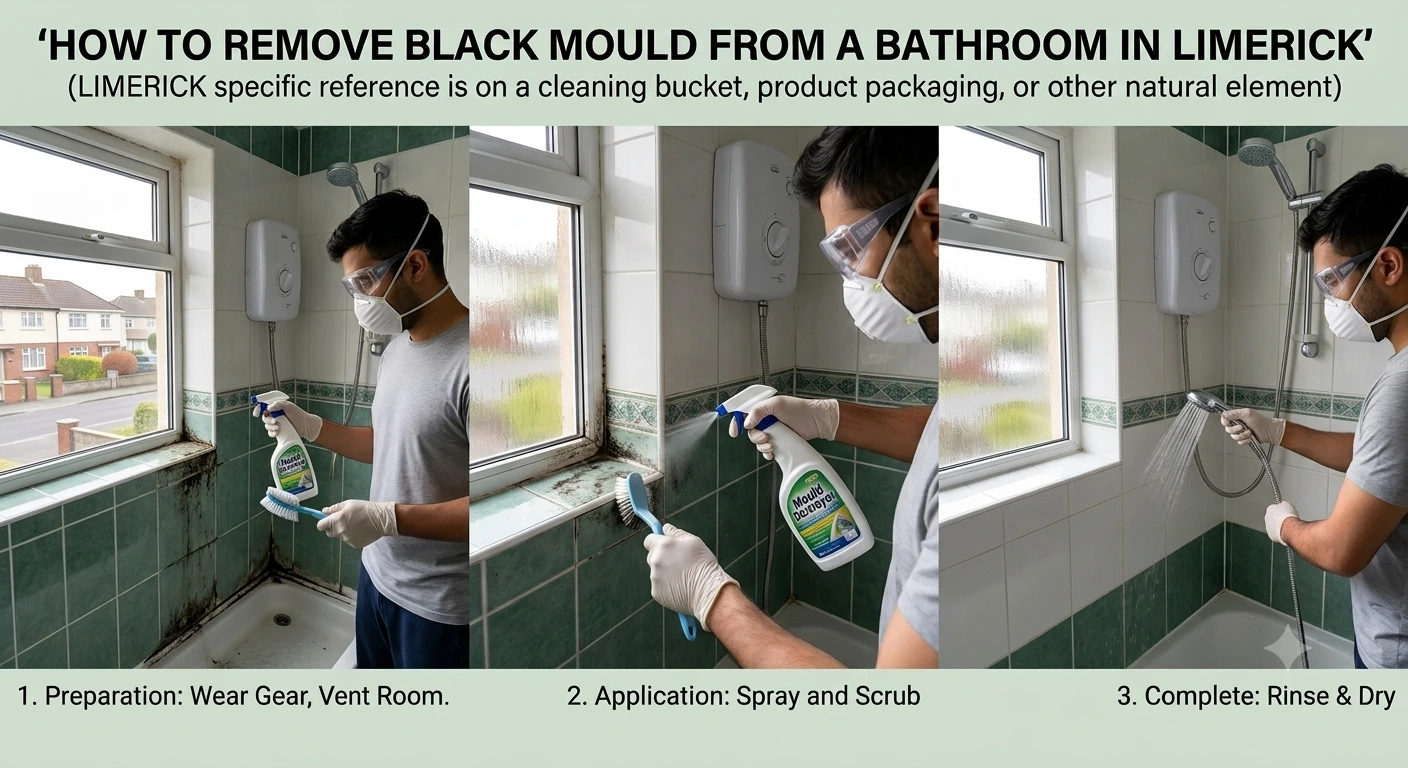
Hydrogen peroxide. A 3 percent solution sprayed directly onto affected areas and left to sit for ten minutes before scrubbing is one of the most consistently recommended treatments, including by users on r/limerick who noted it outperforms bleach for killing mould at the root rather than just bleaching the surface color.
Dedicated mould and mildew spray. Products formulated specifically for bathroom mould tend to penetrate grout and sealant more effectively than general disinfectants.
A stiff brush for grout lines. Mould often sits below the visible surface in porous grout, so scrubbing rather than just spraying is usually necessary for full removal.
Improved ventilation after treatment. Running an extractor fan for at least twenty minutes after every shower, and wiping down tiles and glass screens while still damp, prevents the moisture buildup that lets mould return.
A word of caution that came up repeatedly in Reddit discussions: bleach can actually make the problem worse over time. It removes the black color from the surface but does not kill the mould at the root, and some users reported spores spreading further after repeated bleach use rather than being eliminated.
When DIY Is Not Enough
There are clear signs that a bathroom needs more than a spray bottle and a scrub brush.
The mould keeps coming back within weeks. If you are cleaning the same patch every month, the underlying moisture source has not been fixed. This is a ventilation or insulation issue, not a cleaning issue.
Mould is spreading beyond the shower or bath area. Mould appearing on the ceiling, around the window, or on the wall outside the immediate wet zone usually points to a broader damp problem in the property.
There is a musty smell even when no mould is visible. This often means mould is present behind tiles, under flooring, or inside a wall cavity where household products cannot reach it.
Anyone in the home has respiratory symptoms. Persistent coughing, sinus irritation, or worsening asthma symptoms linked to time spent in the bathroom is a signal to get professional treatment rather than continue self treating.
In rental properties specifically, tenants on limerick city have flagged this as an ongoing concern, with one describing a situation where mould removers and weekly cleaning were needed just to keep black mould from spreading excessively in a property with an underlying damp issue. If you are renting and dealing with recurring mould, raising it with your landlord in writing, alongside photos, is worth doing before it escalates.
What Professional Mould Removal Involves
A professional bathroom mould treatment goes further than surface cleaning. It typically includes treating grout and sealant at a level that penetrates below the visible surface, addressing ventilation where possible, and in more serious cases, coordinating with damp proofing specialists if the mould is linked to a structural moisture issue rather than simple condensation.
For a Limerick bathroom with recurring black mould on tiles, grout, and sealant, our bathroom cleaning service includes deep sanitising and limescale removal alongside mould treatment, which matters because limescale and mould often build up in the same areas and both need addressing for a lasting result.
Preventing Black Mould From Coming Back
Once a bathroom has been properly treated, a few habits make a real difference in Limerick’s climate:
- Keep the extractor fan running during and for twenty minutes after every shower
- Leave the bathroom door open when not in use to allow airflow
- Wipe down shower screens, tiles, and window sills after use rather than letting water sit
- Check window seals and extractor fan function once a year, since a fan that has stopped working properly is a common hidden cause of recurring mould
- Address any condensation on windows promptly, as this is often the earliest visible sign of the same conditions that cause mould
Frequently Asked Questions
What kills black mold permanently in the bathroom?
Hydrogen peroxide at 3 percent concentration kills mould at the root more effectively than bleach, which often only removes the surface color. Permanent results also require fixing the underlying moisture or ventilation issue.
How much does it cost to remove mould in Ireland?
Costs vary by severity and property size, with light treatment starting from under 100 euro and more extensive professional remediation running several hundred euro depending on scope.
How do I get rid of black mould in my bathroom?
Spray affected areas with hydrogen peroxide or a dedicated mould remover, scrub grout and sealant with a stiff brush, rinse, and dry thoroughly. Improve ventilation afterward to prevent it returning.
Is there black mold in Ireland?
Yes, black mould is common in Irish homes due to the damp climate, particularly in older properties with limited insulation or ventilation, and it appears frequently in bathrooms, bedrooms, and along external walls.
How do I clean black mould from shower silicone?
Apply hydrogen peroxide or a mould specific gel directly to the silicone, leave it to sit for several minutes, then scrub with an old toothbrush and rinse. Badly stained silicone that will not lift may need to be replaced.
If your bathroom keeps developing black mould no matter how often you clean it, a professional deep clean can address what home products cannot reach. Visit our bathroom cleaning page for a full breakdown of our mould and limescale removal service across Limerick, or find us on Google Maps to see our location and reviews. For general background on how mould forms and spreads indoors, Wikipedia’s entry on mould offers a useful scientific overview.