
What’s the Difference Between Move Out vs End of Tenancy?
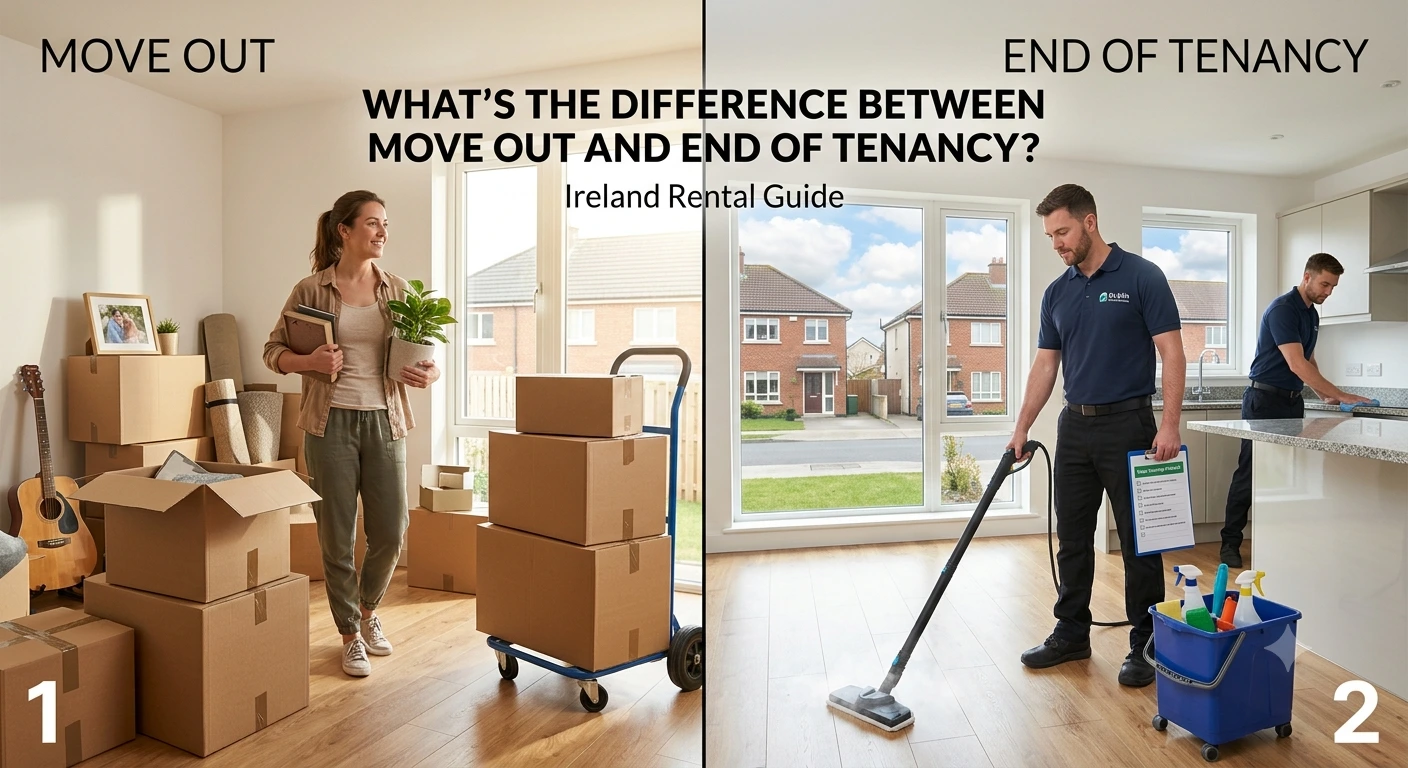
“Move out” and “end of tenancy” get used interchangeably across Limerick by tenants, landlords, and even some cleaning companies. They are not the same thing. One is a legal process. The other is a cleaning service. Knowing the difference saves confusion, missed notice periods, and unnecessary costs.
Move out is the physical act of vacating a rental property, removing belongings, and returning keys. End of tenancy is the legal termination of the tenancy agreement itself, governed by notice periods under the RTB. End-of-tenancy cleaning is a specific cleaning service that prepares the property for handover once you move out.
Move Out vs End of Tenancy The Core Difference
Move out refers to the practical process of leaving a rental property. It covers packing, removing furniture, disconnecting utilities, and handing back keys on an agreed date.
End of tenancy refers to the legal end of the rental agreement between the tenant and the landlord. In Ireland, this is regulated by the Residential Tenancies Board (RTB). A tenancy can end through notice from either party, a break clause, or by mutual agreement and specific notice periods apply depending on how long you have lived in the property.
The confusion happens because these two events are supposed to line up on the same date, but they don’t always. You can serve a valid notice of termination (ending the tenancy legally) while your actual move-out date is negotiated separately with your landlord for practical reasons like overlapping bills or a new tenant’s start date.
| Questions | Move Out | End of Tenancy |
| What it is | Physical act of vacating | Legal termination of lease |
| Governed by | Your own moving plan | RTB notice period rules |
| Timing | Flexible, agreed with the landlord | Fixed by notice period served |
| Cleaning required | General tidy-up optional | Landlord-standard clean expected |
Notice Periods in Ireland — Why the Date Matters
Under RTB rules, the notice period a tenant must give depends on the length of the tenancy. Less than six months requires 28 days’ notice. Between six months and one year requires 35 days. Longer tenancies require progressively more notice, up to 112 days for tenancies over eight years.
Getting this date wrong is one of the most common issues Limerick tenants raise. Serving notice too late means the tenancy legally continues past your intended move-out date, and rent remains due. Confirm your notice period with the RTB before serving notice — this is the single most reliable source for current 2026 rules.
Why This Confuses Cleaning Bookings in Limerick
Here’s where it gets practical. When a Limerick tenant searches for “move out cleaning,” they usually mean the same thing as “end of tenancy cleaning,” a full clean before handing back keys. Cleaning companies use both terms because customers search both ways.
But there’s a real distinction in scope:
A general move-out clean is a standard tidy-up of floors, surfaces, and general dusting. Fine if you’re moving into your own home and there’s no inspection.
An end-of-tenancy clean is a landlord-standard deep clean inside the oven, limescale removal, grout scrubbing, inside all presses, skirting boards, and appliance interiors. This is the standard letting agents actually inspect against.
If you book a “move out clean” expecting deposit-protection results, and the company only does a general tidy, you may still face deductions. Always confirm the checklist, not just the label, before booking.
What Landlords Actually Check at Handover
Letting agents in Limerick work from a standard inspection checklist. The areas most commonly flagged:
- Oven interior baked-on residue is an automatic fail
- Bathroom grout and limescale especially in hard water areas like Castletroy and Raheen
- Inside the kitchen presses and drawers
- Behind and under appliances
- Carpets stains, especially in shared or student properties
- Window sills and tracks
This is the same standard covered under our end-of-tenancy cleaning service in Limerick the full checklist matches what letting agents actually inspect, not a generic tidy-up.
Move-In and Move-Out — The Other Side
If you’re a landlord or letting agent turning a property between tenants, you’re managing both ends at once: the outgoing tenant’s move-out clean and the incoming tenant’s move-in preparation. These are often combined into one booking to minimise the property’s vacant period. See our move in move out cleaning for combined pricing.
Frequently Asked Questions
Do I have to move out when my tenancy ends?
Yes, once a valid notice of termination has been served and the notice period expires, you must vacate. Staying beyond that date without agreement can lead to legal proceedings.
How much notice does a tenant have to give to move out in Ireland?
Notice ranges from 28 days (under 6 months’ tenancy) to 112 days (over 8 years). Check your exact period on the RTB website before serving notice.
What are red flags for tenants during move-out?
Vague verbal promises about deposit return, no written inventory, and landlords who won’t confirm a handover inspection date in writing.
Do landlords usually clean between tenants?
Some do, but most Irish tenancy agreements place the cleaning responsibility on the outgoing tenant to return the property in the condition it was received.
Can I move out before my tenancy legally ends?
Only if there’s a break clause or your landlord agrees in writing otherwise, rent remains payable until the tenancy officially ends.
What’s the difference between move-out cleaning and end-of-tenancy cleaning?
The terms are often used interchangeably, but end-of-tenancy cleaning follows a stricter, landlord-standard checklist. Always confirm the scope, not just the name of the service.
Need a clean that matches the actual letting agent standard, not just a general tidy? Book your end-of-tenancy cleaning in Limerick with a fixed price and a written checklist confirmed before we start.






One Comment